Quantum Horizon Series: Chapter 10 - Magnetar Mode: Why Hybrid Acceleration - Not Miracles - Should Shape Our Quantum Security Roadmap
Why Compounding Acceleration - Not Miracles - Will Define the Quantum Break Timeline
MemComputing’s Contribution: A Measured Advancement
The work referenced in the media relies on an architecture that, in simulation and experiment, scaled prime factorization up to ~300 bits while following a second-degree polynomial fit rather than the exponential scaling typical of traditional algorithms. This result comes from academic research on the MEMCPU Platform and self-organizing gates, which matched polynomial timing over the tuned range tested.
Why CNN-Style “Quantum Is Decades Away” Narratives Miss the Bigger Picture
Critics often assert:
“Quantum is decades away.” “AI doesn’t change number theory.” “Hybrid classical/AI/quantum systems are just hype.”
Those critiques are too blunt.
The real risk isn’t waiting for a single milestone like a full-scale quantum computer.
It’s compound acceleration across multiple layers, reducing effective cost and compressing the timeline implicitly:
3. The Three Layers That Compound Risk
A) Algorithmic Efficiency - Moves the Goalposts
Quantum or hybrid approaches continually refine how problems are represented and solved. Even classical extrapolations (like the MemComputing polynomial fit) show how algorithmic framing matters and how constant factors, not just time complexity, can shift feasibility boundaries.
B) AI as a Meta-Optimizer
AI doesn’t magically factor numbers but it does:
✔ optimize circuit compilation and scheduling ✔ tune error-correction layouts ✔ automate parameter search for specialized architectures ✔ expedite workflow integration from R&D to deployment
These meta-optimizations reduce the friction in engineering and accelerate the effective path to capability.
C) Classical Specialization - The Silent Leg
Specialized silicon historically redefines feasibility:
GPUs rewired cryptanalysis economics
ASICs rewrote hashing economics
AI accelerators rewired ML compute curves
In memory-processing ASICs, we see the same pattern: domain-specific acceleration with potential impacts on problems once deemed infeasible under pure von Neumann constraints.
Strategic Asymmetry: Harvest Now, Decrypt Later
Defenders often demand a date. Attackers don’t. Encrypted data captured today becomes tomorrow’s plaintext. Importantly, defenders actually don’t need certainty about when a break will occur.
They already face asymmetry:
Attackers can record encrypted traffic today
Then decrypt it later when capability arrives
This is an existing vulnerability, not a future hypothesis.
NIST finalized core Post-Quantum Cryptography standards in 2024:
ML-KEM
ML-DSA
SLH-DSA
That is not panic. That is institutional recognition of asymmetry.
You don’t need certainty about the break date.
You need acknowledgment of risk compounding.
That’s why National Institute of Standards and Technology (NIST) has finalized Post-Quantum Cryptography standards and urges proactive migration to quantum-resistant algorithms, to mitigate Harvest-Now-Decrypt-Later risk.
Algorithmic Improvements Move the Goalposts
Quantum resource estimates have already shifted over time.
Recent analyses from industry research groups suggest that - under certain assumptions -RSA-2048 could theoretically be attacked with on the order of ~1 million noisy qubits over about a week. That’s not a “break tomorrow” claim. It is evidence that:
Engineering assumptions matter.
Constants matter.
Architecture choices matter.
When algorithmic efficiency improves, required hardware thresholds drop.
This is not hype. It’s how technical ecosystems evolve.
AI Rarely “Breaks RSA”, It Compresses the Pipeline
AI does not rewrite number theory.
It does something arguably more dangerous: It reduces friction.
AI contributes to:
Circuit compilation and routing optimization
Error-correction layout tuning
Parameter search in specialized hardware
Side-channel detection and protocol misuse exploitation
Automation of integration and deployment cycles
AI doesn’t change asymptotic complexity. It changes time-to-weaponization.
That distinction matters.
The real thesis is this:
When algorithmic efficiency improves in steps, hardware improves in waves, and integration improves continuously, the multiplication of these factors bends timelines.
The Steve H. Theorem - A Compound Risk Lens
Define:
Effective Break Capability (EBC) ≈ (Algorithmic Efficiency) × (Compute Scale) × (System Integration Leverage)
Each term evolves differently:
Algorithmic efficiency improves in discontinuous jumps.
Compute scale grows in hardware generations.
Integration leverage (AI + orchestration) improves steadily.
Even modest gains in each term produce multiplicative growth.
The result?
Not a smooth line. A curve with kinks. And kinks compress timelines unexpectedly.
What This All Means for Cryptographic Strategy
MemComputing’s work is not proof of RSA-2048 collapse. But it is a legitimate indicator that computational cost curves are not static. Hybrid acceleration across algorithm, AI, and hardware can compress timelines. Strategy should be based on curve bending, not binary break/no-break predictions.
In cybersecurity, what matters isn’t whether the break happens on a specific date, but whether we can anticipate and adapt to a world where timelines are compressed by compound innovation.
Risk in the quantum era is not defined by a single breakthrough. It is defined by the convergence of improvements across multiple layers, each multiplying the others.
That’s Magnetar Mode. And it’s the lens we should use to navigate the next decade of cryptographic transformation.
The “Magnetar Mode” Security Framework for Strategic Risk
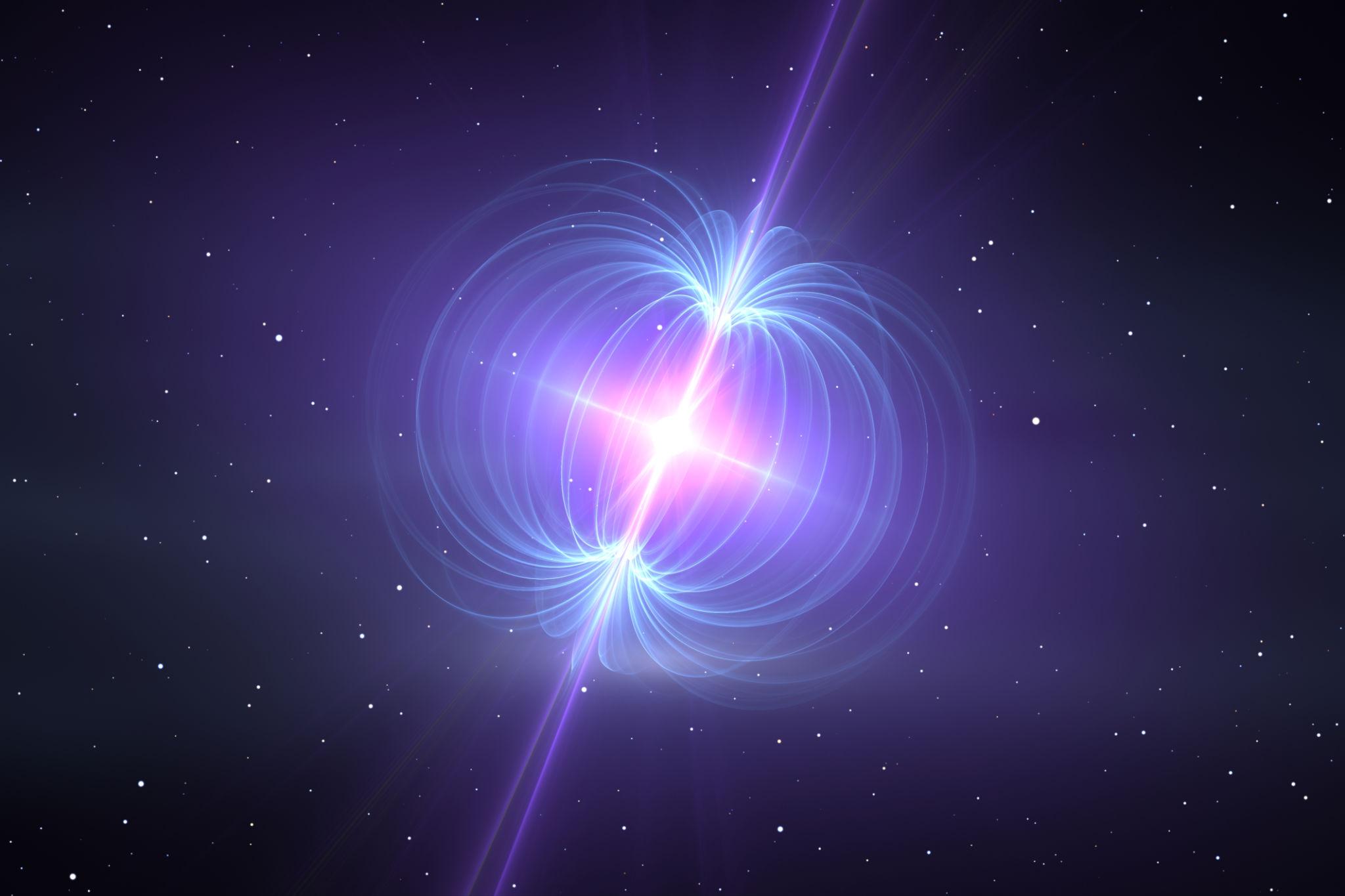
In astrophysics, a magnetar bends spacetime so intensely that conventional rules look distorted. Similarly, in computation:
Risk trajectories bend when multiple layers accelerate simultaneously.
Call this Magnetar Mode:
Effective Break Capability (EBC) ≈ (Algorithmic Efficiency) × (Compute Scale) × (Integration Leverage)
Where:
Algorithmic gains are step functions,
Compute scale advances in waves,
Integration (AI + orchestration) improves continuously.
Multiply modest improvements across all three, and you don’t get a linear timeline. You get a curve with kinks and fat tails.
Why 2025 MemComputing Research Reinforces the Case for Compound Acceleration
In 2023, attention focused on memcomputing’s 300-bit factorization experiments and ASIC extrapolations. In 2025, the signal matured. MemComputing’s recent publications show something more important than raw bit-length milestones: They show architectural convergence. And convergence bends timelines.
The Signal in the Noise: What the 300-bit Memcomputing Claim Actually Means
In 2023, the memcomputing community reported ~300-bit RSA-like factorization experiments, alongside scaling fits over a tuned range and discussion of ASIC acceleration paths. It was a demonstration that alternative compute paradigms + specialization are being actively explored to compress cryptanalytic cost.
History shows what specialization can do:
GPUs reshaped password cracking and crypto mining.
ASICs redefined hashing economics.
AI accelerators (TPUs) changed training cost curves.
Even if memcomputing doesn’t scale to 2048 bits, the category risk is credible:
Specialized silicon + novel architectures can shift feasibility boundaries.
MemComputing’s 2025 research portfolio expands in four critical dimensions:
1. Memory-Induced Long-Range Order in Dynamical Systems (July 2025)
This work explores how memory effects in nonlinear dynamical systems create emergent long-range order, a prerequisite for scalable self-organizing computation.
Why it matters:
Self-organizing gates were already central to DMMs. Now we see formalization of how memory generates coherence across large systems.
Translation:
This is not brute-force factoring. It’s structural computation.
2. Generative Neural Annealer for Black-Box Combinatorial Optimization (May 2025)
Here, memcomputing principles merge with generative neural architectures. This is crucial. It demonstrates:
-Hybrid AI + memcomputing systems are being operationalized for combinatorial optimization.
-Factoring is a special case of structured combinatorial optimization.
The strategic takeaway:
AI is not replacing number theory, it is integrating with alternative computational substrates.
3. Mixed-Mode In-Memory Computing in Memristive Crossbars (September 2025)
This paper addresses hardware-level logic execution in memristive arrays. Now we move from:
Simulation → Architecture → Physical substrate.
This is the classical-specialization layer.
Memristive crossbars collapse memory + logic boundaries, reducing data movement cost, which is a dominant energy/time bottleneck in classical systems.
Moore’s Law is slowing.
In-memory computing is one of the few credible ways to bend that curve.
4. Digital Memcomputing with Frog Jumps (October 2025)
Biologically inspired state transitions.
Again, not about raw speed.
About dynamic escape from local minima.
About system-level convergence efficiency.
Why This Reinforces the Compound Acceleration Thesis
Let’s revisit the Steve H. Theorem framing:
Effective Break Capability (EBC) ≈ Algorithmic Efficiency × Compute Scale × Integration Leverage
Now look at the 2025 research directions:
✔ Algorithmic efficiency: dynamical systems theory + neural annealing
✔ Compute scale: memristive crossbar hardware
✔ Integration leverage: AI-driven hybridization
Each factor is evolving independently. Together, they multiply. Not linearly. Dismissing the research as “hype” misses the pattern. The pattern is architectural stacking. And architectural stacking is how inflection points emerge.
Moore’s Law Alone Won’t Do It - But Convergence Might
Even optimistic Moore-like scaling does not bridge 300 bits to 2048 bits directly.
However: If algorithmic constants improve, if hardware specialization reduces bottlenecks, if AI reduces tuning and deployment latency, then the cost curve shifts.
Maybe gradually. Maybe suddenly. That uncertainty creates fat tails in break-date distributions. And fat tails are what security architects must design against.
Magnetar Mode Security: A Strategic Posture
A magnetar does not outrun physics or the universe, it reshapes its environment. Extreme magnetic fields erase stable states. Spacetime curvature bends trajectories. Entropy floods the system.
Similarly:
Magnetar Mode security does not assume a precise break date.
Magnetar Mode security means:
That cryptographic agility must be faster than attacker modeling cycles
Built-in regular entropy rotation that prevents stable footholds
A Zero-Trust Architecture that assumes convergence, not linear progress
It is designing for the fat tail of risk distributions
It assumes:
Convergence is happening
Hybrid acceleration is real
Cost curves bend
Asymmetry favors attackers
And therefore:
Cryptographic agility is mandatory. Because compounding timelines do not announce themselves before they kink. Not because RSA-2048 is broken today.
This is not about predicting the exact year RSA falls.
It is about understanding that:
The future rarely breaks in a single flash. It converges.
And convergence is already underway.
The Strategic Conclusion
MemComputing’s 2025 research shows:
We are not observing isolated experiments. We are observing:
Theoretical foundations
AI hybridization
Hardware specialization
Cloud/HPC application pathways
That is an ecosystem maturing.
In cybersecurity, ecosystems matter more than headlines.
The future rarely breaks in one spectacular leap. It converges. And convergence is already underway.
That is why Blackhills Quantum (BQCM) and Blackhills Quantum USA (BQCU) together with partners BoredBrains Consortium and Ulshe AI developed the OMTZA (Open Modular Zero Trust Architecture) security framework that uses the MICT (Mobius inspired cyclical transformation) inspired safeguards in our Quantum Secure Dome (QS-Dome®) and Quantum Combat Extension Packs (QCEP™) Solutions, especially designed for protecting high stakes environments. (Defense, Government , Financial, Critical Services)
For interested clients, investors or just for more info - mail: info@blackhillsquantum.com or DM Steve H. author of this article
Steve H.
QAI CISO | CISA | Global Defense Innovation Strategist & Technology Advisor | Futurist
Please read carefully: https://www.linkedin.com/posts/activity-7426646159118618624-rcsG and https://www.linkedin.com/posts/activity-7427376130648870912-vIRm Also read https://www.linkedin.com/posts/activity-7426883200603385856-yz-3 and https://lnkd.in/e6R2-Ns6
Final Thought:
Dismissing hybrid quantum + AI + classical acceleration as “fictional” is a category error.
Moore’s Law alone won’t break RSA-2048. Memcomputing alone hasn’t proven it can. AI alone doesn’t change number theory.
But together?
They bend curves.
And in cybersecurity, bending curves is enough to change everything.
#AI #QuantumSecurity #Defense #Defence #Hybrid #PostQuantum #PQC #QKD #AIinSecurity #Risk #ZeroTrust #CISO